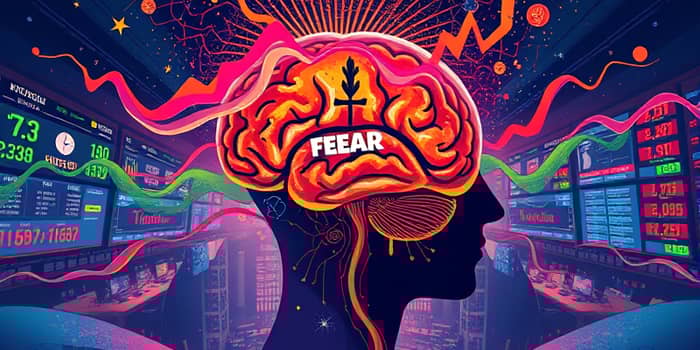
As investors navigate the unpredictable world of finance, they often overlook the intangible influences that steer their decisions. Behavioral finance reveals deep insights into why markets deviate from textbook efficiency. By understanding these hidden drivers, individuals and institutions can strive for more balanced portfolios and resilient strategies.
Behavioral finance examines how human cognition and emotions distort rational decision-making in financial markets. Unlike the Efficient Market Hypothesis, which assumes investors are fully informed and unemotional, this field acknowledges that people are prone to systematic errors.
This interdisciplinary approach combines psychology and economics, showing that markets are not always efficient due to predictable, emotion-driven irrational behaviors exhibited by individuals, institutions, and groups. Recognizing these influences can help shape better investment frameworks.
Overconfidence Bias arises when investors overestimate their knowledge, skills, or ability to forecast market trends. Research indicates that professional fund managers trade up to 70% more frequently than passive benchmarks would suggest, often eroding net returns after fees and taxes.
During the dot-com bubble, many market participants believed their stock selections were infallible, fueling a surge of capital into unproven technology firms. Even after sharp corrections, some persisted in attributing losses to external factors, reinforcing the cycle of excessive trading and risk-taking.
Studies, including the 2024 Dalbar Analysis, show that overconfident investors underperformed the S&P 500 by an average of 848 basis points annually. To combat this bias, investors should emphasize systematic and data-driven decision processes, diversify across uncorrelated assets, and invite third-party audits to challenge ingrained assumptions.
Anchoring Bias occurs when individuals fixate on an initial reference point—such as a purchase price or analyst forecast—and inadequately adjust their expectations as new information emerges. This mental shortcut can cause investors to hold underperforming assets far beyond rational thresholds.
For example, an investor who buys shares at $50 may anchor to that price and refuse to sell at $45, hoping for a rebound that may never materialize. Such behavior prolongs downturns within portfolios and can exacerbate market-wide sluggishness during bear cycles.
Mitigation techniques include setting predefined sell criteria, employing algorithmic alerts for reevaluation, and reframing investments periodically without regard to original entry points. By focusing on forward-looking fundamentals rather than past anchors, decision-makers can avoid costly emotional traps.
Kahneman and Tversky’s pioneering research shows that the pain of losses is psychologically twice as intense as the pleasure of equivalent gains. This disparity drives many investors to cling to losing positions to avoid realizing losses and to sell winners too quickly to secure gains.
In 2008, panic-selling at market lows caused many to miss subsequent recoveries, often holding assets in cash until years after the rebound. This tendency not only amplifies portfolio volatility but also reduces compounding benefits over time.
Effective strategies to counter loss aversion include employing stop-loss orders, maintaining clear long-term objectives, and using mental accounting techniques that treat unrealized losses as temporary fluctuations rather than permanent deficits. Emphasizing process over outcome can foster resilience during turbulent periods.
Confirmation Bias leads individuals to seek, interpret, and remember information that confirms their preexisting beliefs, while neglecting evidence that challenges their views. An investor convinced of a bullish thesis may read only optimistic research reports, overlooking critical warnings.
This selective information processing can entrench poor investment decisions and foster overly concentrated and undiversified portfolios. Historical data reveals that investors who actively sought out opposing viewpoints outperformed those who did not by nearly 2% per annum, underscoring the value of intellectual diversity.
Structured research frameworks that mandate the review of dissenting analyses, along with collaborative investment committees, can disrupt the confirmation cycle and lead to more balanced, evidence-based conclusions.
Herd Mentality, also known as herding behavior, occurs when individuals mimic the trades of others, often based on the perception that the crowd must know something they do not. This collective action can inflate asset bubbles and create sharp reversals.
The 2021 GameStop event exemplifies how social media forums amplified emotional investing. Retail crowds drove prices far above intrinsic value before a rapid unwind. Such episodes highlight the risks of emotional contagion among traders without fundamental backing.
Guarding against herd behavior requires disciplined analysis, independent verification of data, and readiness to act contrary to prevailing market narratives when evidence indicates mispricing.
Recency Bias causes investors to overweight recent market trends when forecasting future performance. A prolonged bull market may breed unwarranted optimism that valuations will continue rising indefinitely, while sudden declines can trigger irrational pessimism.
By concentrating on the most recent data, traders may ignore broader historical cycles. Research suggests that investors who adopt multi-decade performance windows reduce forecast error by up to 25%, leading to more stable return profiles.
Employing systematic rebalancing based on long-term targets and consulting comprehensive market histories can help neutralize the distortive effects of recency bias.
The Availability Heuristic leads people to base probability estimates on the ease with which examples come to mind. Vivid stories of overnight IPO riches may entice investors into speculative ventures, overlooking the statistical rarity of such outcomes.
Academic studies show that over 60% of retail investors overestimate the likelihood of extreme market events when exposed to sensational headlines. Balancing anecdotal evidence with broad quantitative datasets supports more accurate risk assessments.
Integrating automated risk modeling and scenario analysis into decision frameworks ensures that memorable incidents do not skew portfolio allocations disproportionately.
Behavioral finance is grounded in Kahneman’s Dual-System Theory, dividing thought processes into fast, intuitive System 1 and slow, deliberative System 2. In high-pressure environments, System 1 often dominates, leading to instinctive and error-prone behavioral reactions.
This framework challenges classical models of rational economic agents, introducing a more nuanced understanding of market inefficiencies and human fallibility.
To reduce bias-driven errors, investors can adopt a range of practical measures:
Institutions can further combat groupthink by assembling diverse investment teams and fostering a culture of open debate. Cutting-edge AI tools now offer real-time bias detection, flagging potential distortions before they impact performance.
As the field evolves, investors are weaving psychological insights directly into algorithmic models. Machine learning platforms that detect emergent bias patterns are on the rise, offering the promise of proactive and automated error correction and enhanced portfolio resilience.
In an increasingly complex market landscape, a balanced integration of rigorous data analysis and psychological awareness will be essential for navigating volatility and achieving consistent long-term success.
References