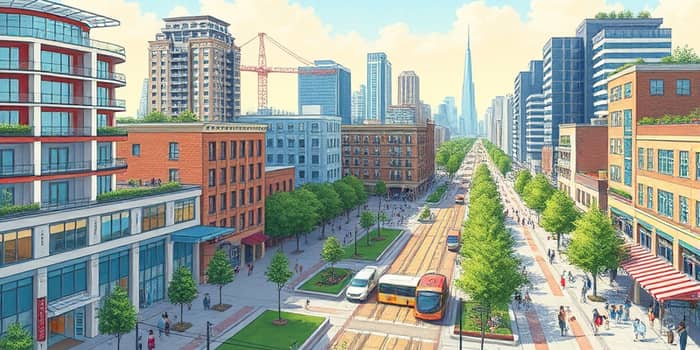
Across the United States and beyond, cities and towns once shadowed by economic decline are experiencing a renaissance. From the Southeast to the Pacific Northwest, a wave of innovation, community collaboration, and strategic investment is transforming underused districts into engines of opportunity. In this article, we uncover the approaches, success stories, and practical steps that can guide any locale toward vibrant renewal.
Cities are more than geographic locations; they are living organisms shaped by people, commerce, and culture. When neighborhoods stagnate, residents face fewer job prospects, declining services, and eroding public morale. Urban revitalization seeks to reverse that trend by transforming underused urban landscapes into thriving centers of activity and growth. A revitalized city fosters greater social cohesion, stimulates private investment, and offers a higher quality of life.
Moreover, emerging economic pressures—from cooling national markets to global competition—demand that urban areas become more adaptable and resilient. Communities that embrace renewal strengthen their ability to weather downturns, attract talent, and sustain long-term growth.
Revitalization does not happen by chance. It requires a deliberate mix of policy incentives, infrastructure investment, and community engagement. Key strategies include:
When these elements align, the result is inclusive, resilient urban growth strategies that benefit residents, businesses, and governments alike.
Across the nation, several mid-sized and growing cities have become prototypes for effective revitalization. In North Carolina, Raleigh and Charlotte leverage research parks, state agencies, and financial services to power job creation. Suburban communities like Cary, Huntersville, and Concord are booming with new housing, while urban cores boast vibrant food scenes and cultural festivals.
In the South, Greenville, SC, has leveraged advanced manufacturing and automotive investment to spark downtown redevelopment, while Chattanooga, TN, earned global recognition for its riverfront retrofit and community-driven innovation districts. Meanwhile, Boise, ID, appeals to remote workers and young families with its outdoor access and business-friendly climate, driving steady inbound migration.
Phoenix, AZ, stands out for its large-scale homebuilding and light rail network, offsetting seasonal challenges with strategic transit and employment incentives. Closer to the Northeast, Albany, NY, balances state government jobs and semiconductors with affordability and walkable neighborhoods, drawing a steady flow of new residents.
These cities share a few common ingredients: a clear vision, strategic partnerships between public and private sectors, and programs that lower barriers for entrepreneurs and developers. By studying these models, other communities can replicate what works while customizing solutions to local assets.
These projects emphasize people-centered revitalization and sustainable redevelopment, shifting the focus from megaprojects to community-led, incentive-driven initiatives that deliver measurable social and economic returns.
In an era of climate uncertainty and market volatility, resilience has become a core goal of urban planning. Municipalities are adopting smart growth projects and green infrastructure—stormwater parks, solar canopy installations, and energy-efficient public buildings—to reduce environmental risks and operational costs. At the same time, broadband expansion and digital inclusion initiatives ensure that every citizen can participate in the digital economy.
Resilience also means planning for demographic shifts. As remote work becomes permanent for many professionals, cities must adapt zoning rules, repurpose underutilized office buildings, and support coworking spaces. Aligning infrastructure investment with evolving work patterns can prevent downtown decline and stimulate 24-hour activity cycles.
No single blueprint fits every city, but a shared approach can guide stakeholders through the revitalization process. Consider these practical steps:
By combining strategic vision with tactical execution, cities can move from planning to impact, ensuring that investments deliver lasting benefits for residents and businesses.
The journey toward urban revitalization is both challenging and invigorating. It calls for innovation, collaboration, and an unwavering commitment to equity and sustainability. When policymakers, developers, and communities unite around a shared vision—one that elevates opportunity, celebrates local character, and embraces resilience—they unlock the true potential of their cities.
As we look to tomorrow, the lessons from Raleigh and Rotterdam, Barcelona and Boise remind us that transformation is within reach. With bold ideas and collective action, any city can become an economic hub for tomorrow—a place where people thrive, businesses prosper, and the urban fabric pulses with creativity and hope.
References