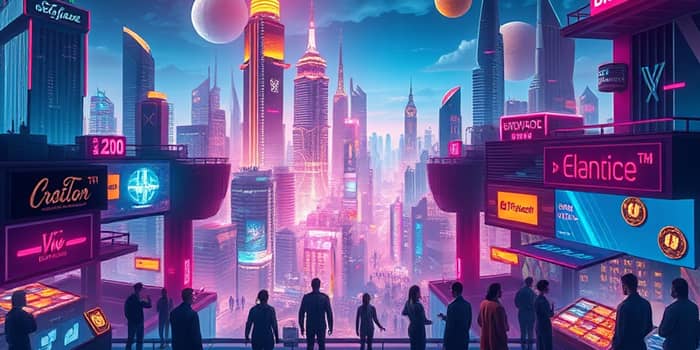
In an era defined by rapid technological innovation, the boundary between the tangible and the digital is dissolving. Virtual economies are no longer niche curiosities; they have evolved into powerful ecosystems where creativity, collaboration, and commerce collide. These digital landscapes empower individuals to transform code and creativity into real-world value for participants, offering new avenues for income, expression, and community.
From the early Multi-User Dungeon (MUD) adventures of the 1970s to today’s sprawling metaverses, virtual economies have surged forward. What began as simple text-based interactions has blossomed into complex marketplaces supporting billions of users. Platforms like Fortnite, Decentraland, and blockchain-driven worlds demonstrate how digital assets and virtual goods can hold economic significance on a global scale.
At their core, virtual economies are digital ecosystems where users create, trade, and monetize intangible items, services, and currencies. They thrive on a delicate balance of supply, demand, and user engagement. Whether earning gold by completing quests in an MMORPG or minting unique artwork as an NFT, participants generate value that often transcends the platform itself.
Key technological enablers include blockchain, decentralized finance, and smart contracts. These innovations provide transparency and provable ownership, ensuring that scarcity and authenticity remain intact even in a virtual environment. As a result, items and currencies can be securely traded in secondary markets, forging a tangible link between digital endeavors and real-world wealth.
Successful virtual economies rest on several interdependent pillars—currencies, scarcity, exchanges, and community dynamics. Each element plays a crucial role in driving engagement, maintaining equilibrium, and nurturing innovation.
Together, these components foster ecosystems where both casual participants and professional creators can thrive. Thoughtful economic design ensures that participants feel rewarded for their time and creativity, while platforms maintain long-term sustainability.
One of the most revolutionary aspects of virtual economies is their capacity to intersect with traditional finance. Through real money transactions (RMTs), users can buy and sell digital assets for actual currency. This bridge creates livelihoods, funding artistic ventures, small businesses, and even full-time careers.
However, navigating this convergence requires robust regulatory frameworks and transparent design. Platforms must strike a balance between accessibility and security, preventing fraud without stifling innovation. When executed well, these economies become engines of empowerment, democratizing wealth creation on a global scale.
This comparison highlights how virtual economies mirror real-world markets while introducing unique psychological drivers. The freedom to experiment with scarcity models, reward systems, and governance structures has sparked new academic research and entrepreneurial ventures alike.
Designing a thriving virtual ecosystem demands more than technological prowess; it requires an understanding of human motivations and market dynamics. Developers and community leaders should consider:
By embedding these principles, creators can cultivate inclusive platforms that empower users and adapt to the evolving needs of a global community.
Across the digital frontier, pioneers are rewriting the rules of wealth creation. In Decentraland, users purchase and develop virtual land, hosting concerts, galleries, and storefronts. Artists in The Sandbox earn income by selling custom skins and experiences, while guilds in World of Warcraft coordinate complex raids that generate valuable in-game gold for distribution.
These narratives illustrate how virtual economies can transform passion into profit. As major brands and institutions explore metaverse partnerships, the potential market size could soar to trillions of dollars. Yet, the most profound impact lies in how individuals gain agency, forging careers through coding, design, or community management without traditional barriers to entry.
Venturing into virtual economies is both exhilarating and challenging. Success depends on a blend of creativity, strategic planning, and community engagement. By embracing these environments with curiosity and responsibility, participants can unlock unprecedented avenues for innovation and prosperity.
As we peer into the horizon of Web3, metaverses, and decentralized marketplaces, one truth becomes clear: virtual economies are more than gaming innovations—they are catalysts for a new form of human collaboration, where ideas and passion collide to generate real impact.
References