The accelerating shortage of freshwater resources poses a profound threat to economies, ecosystems and human livelihoods across continents. As climate change intensifies and demand surges, the world confronts an unprecedented challenge that demands urgent collective action.
Understanding the magnitude of this crisis is the first step toward building resilient communities and sustainable economies. By exploring the scale, economic consequences, social inequities and viable solutions, we can chart a path to secure water for future generations.
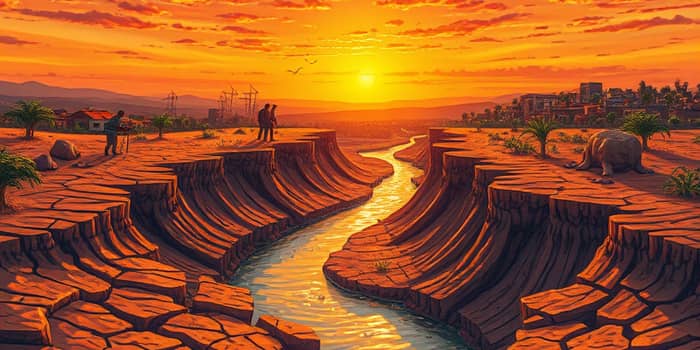
Nearly two-thirds of the world’s population endure acute water scarcity for at least one month each year. Current projections warn that by 2050, large areas of the globe will suffer from extreme drought, impacting livelihoods, agriculture and energy production.
A landmark UN report recently declared that humanity has entered an “era of global water bankruptcy”. Chronic groundwater depletion, pollution and mismanagement compound the stress of rising temperatures, driving borewells deeper and communities to brink of desperation.
Today, more than 4 billion people face severe scarcity annually, and almost 500 million endure these conditions year-round. Nearly 2.1 billion lack safe drinking water—leaving families vulnerable to waterborne diseases and undermining progress on global health objectives.
Water scarcity exacts a staggering toll on the global economy. Currently, drought and inadequate sanitation cost the world over $567 billion annually. Losses include reduced labor productivity, crop failures and mounting healthcare expenses.
Economic modeling reveals that each standard deviation increase in water scarcity can shrink output growth by up to 0.16% and raise consumer price inflation by nearly 3%. By 2050, some regions risk losing more than 10% of their GDP to water constraints, imperiling development goals.
Agriculture accounts for nearly 70% of freshwater withdrawals worldwide. Currently, over 170 million hectares of irrigated land endure severe water stress—equivalent to all of Western Europe’s farmland combined.
Salinization and soil degradation have already compromised tens of millions of hectares of cropland, putting nearly half of global food production at risk. Without rapid adoption of water-smart agricultural practices, communities may face recurring famines and spiraling grain prices.
Water scarcity deepens existing inequalities. Women and girls spend over 250 million hours daily collecting water, missing school and income opportunities. In low-income regions, families often pay more of their income for inferior water sources, perpetuating poverty cycles.
Ineffective governance and data gaps undermine equitable distribution. Many nations lack robust monitoring of groundwater levels, preventing timely interventions and fueling conflicts over transboundary rivers and aquifers.
As freshwater becomes scarcer, tensions over shared rivers and basins intensify. Regions dependent on cross-border water sources face elevated risks of political instability and conflict. Experts warn that water disputes could become the next flashpoint in geopolitics.
At least half the global workforce relies on water in their industries—from agriculture and energy to manufacturing and transport. Water shortages therefore jeopardize jobs, supply chains and the foundation of modern economies.
Despite the severity of the crisis, targeted investments and reforms offer a path forward. Every $1 invested in water and sanitation returns four times that amount in economic benefits through healthier, more productive populations.
Countries must prioritize water as a central pillar of climate action, food security and biodiversity protection. By setting ambitious targets for efficiency, recycling and protection of freshwater ecosystems, policymakers can avert the most catastrophic outcomes.
International bodies, businesses and civil society must align investments toward sustainable infrastructure, technological innovation and community-led stewardship. Only through collective commitment can we transform the looming crisis into an opportunity for innovation and resilience.
Securing water for future generations is not merely an environmental imperative—it is the foundation of economic stability, social equity and global peace. The time to act is now: by uniting around shared responsibility, we can ensure that every person has access to the vital resource that underpins all aspects of life.
References