In 2026, global economic power is undergoing a profound realignment. Regions are no longer generic players in a single globalized market; they have evolved into distinct hubs specializing in complementary roles. This transformation offers both challenges and opportunities for businesses, governments, and communities seeking to navigate an increasingly complex world.
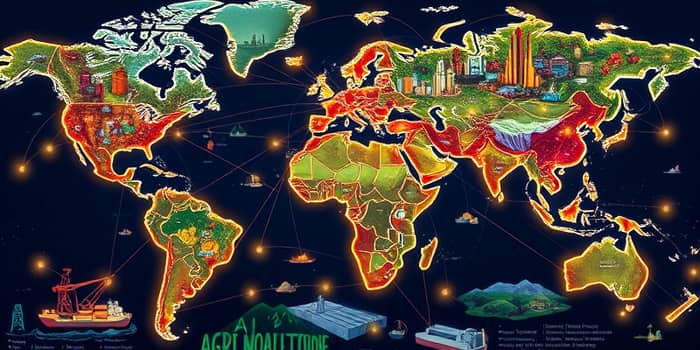
The world’s economic center of gravity is shifting as countries leverage their strengths to fill critical roles in global value chains. Asia emerges as the primary growth engine, fueled by mass manufacturing and rapid tech adoption. North America solidifies its position as the capital and demand anchor, backed by deep markets and robust R&D. Europe serves as the engineering stabilizer, advancing high-value manufacturing and spearheading the energy transition.
Meanwhile, Latin America consolidates its status as a vital supplier of resources and agribusiness products, and the Middle East accelerates its infrastructure and diversification plans beyond oil. Oceania capitalizes on capital-intensive resources, and Africa stands poised for accelerated growth. These complementary hubs are reshaping foreign direct investment, supply chains, and production networks in unprecedented ways.
The top five economies in 2026 are commanding ever-greater influence over global flows of capital, goods, and technology. Their scale and diversity enable them to act as both demand anchors and supply bases for industries worldwide.
These economies exemplify interconnected regional economic powerhouses, each supplying critical inputs while generating immense domestic demand. Their policies on trade, technology, and sustainability will continue to shape the trajectories of neighboring countries and global markets.
Each region’s specialization creates an ecosystem of mutual reliance and strategic competition. Understanding these roles helps stakeholders anticipate shifts and identify emerging opportunities.
Businesses and policymakers must adapt to this multi-centric world by aligning strategies with regional strengths and interdependencies. Agility, resilience, and foresight are paramount to thrive amid evolving trade patterns and investment flows.
The 2026 landscape of economic hubs is defined by specialization, connectivity, and dynamic shifts in capital, goods, and ideas. Stakeholders who understand each region’s role—and who act decisively to integrate across these hubs—will unlock new avenues for growth. In a world where economic gravity is no longer centered on a single powerhouse but shared among specialized regions, collaboration and strategic foresight become the keys to global success.
References